
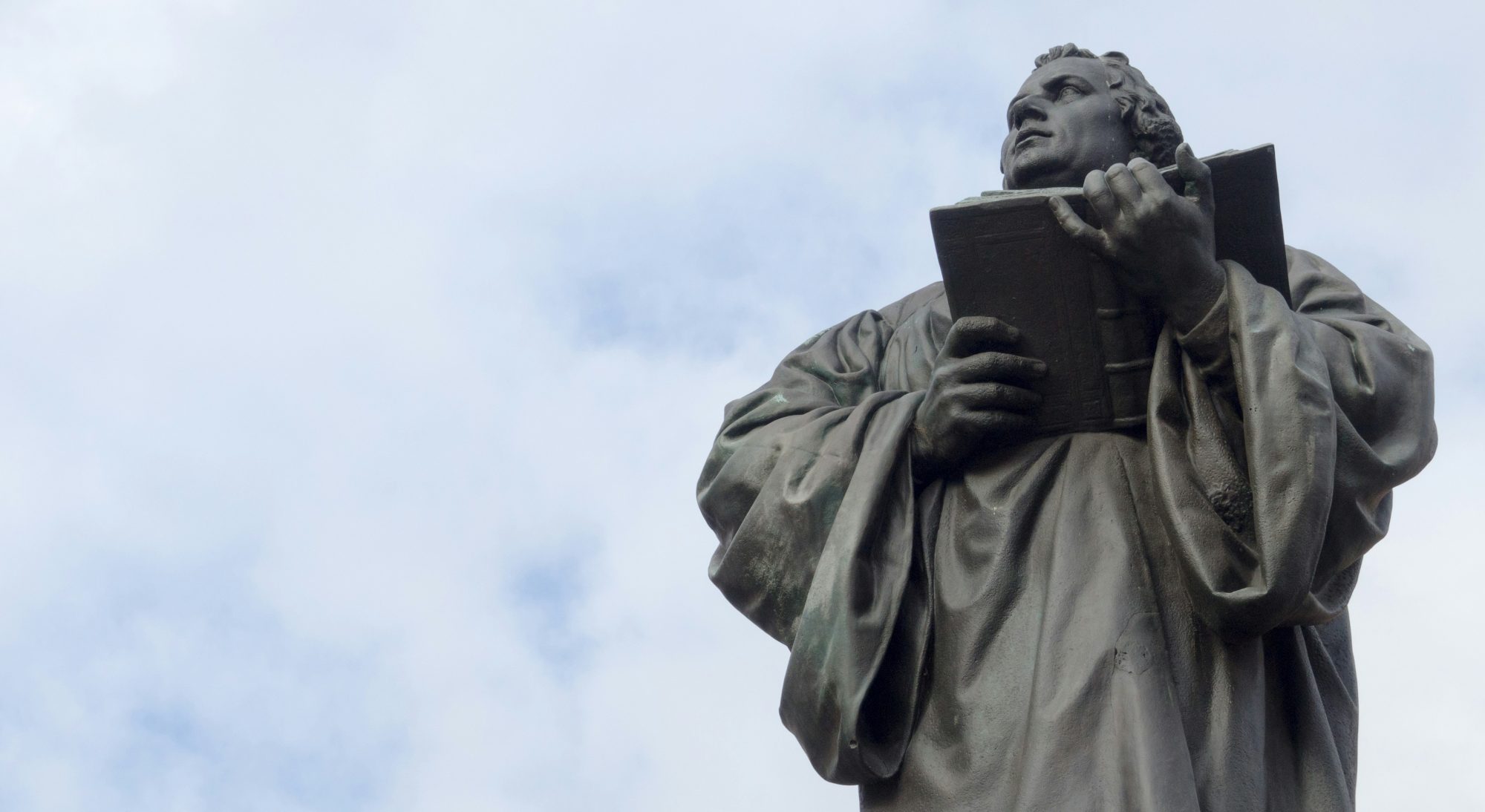
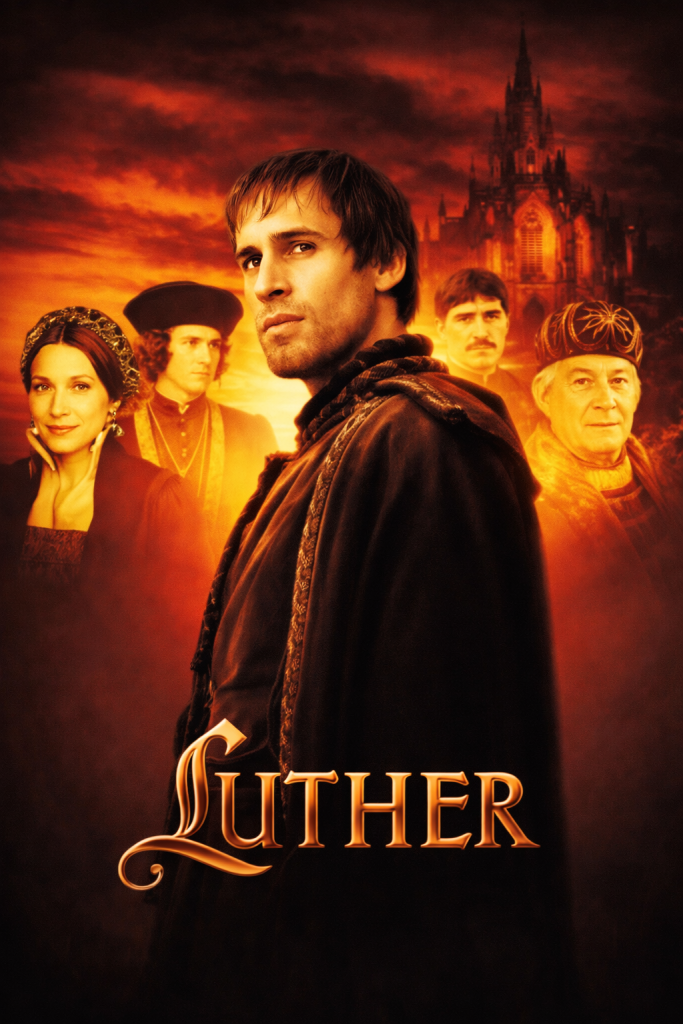
Eric Till’s film Luther1 portrays a turning point in the history of the Church: the early Protestant Reformation in the sixteenth century. This movie is set in Germany within the Holy Roman Empire. The movie follows Martin Luther from his life as an Augustinian monk to his public break with the papacy. The main theme of the film is the conflict between conscience bound to Scripture and a religious system that, in Luther’s view, had deviated from the gospel. Luther’s struggle is not political at first, but spiritual: how can a sinner be made right with God? This is the question Job asked in Job 9:2. The movie uses that inner crisis, by showing Luther’s confession, to frame the larger historical movement that reshaped Western Christianity.
Historically, the film places Luther in the right moment and the right pressures. It depicts the sale of indulgences through Johann Tetzel2 and illustrates how indulgence preaching sparked outrage among both clergy and laypeople. What I like about the movie was how the poor (especially a young woman, Hanna, who had a paralyzed child called Grete) used to sell their stuff just to buy these indulgences; Luther tells the young lady who had brought indulgences, “This is just paper. It is nothing!3” That part aligns well with the basic facts: indulgences were connected to repentance and church penalties. Still, in popular preaching, they were presented in ways that sounded like forgiveness could be bought.
I like the line that was used by Luther, “If the Pope would empty purgatory, why won’t he do it out of love, rather than out of money?” The film also shows the social reality that many German territories hated the flow of money to Rome, so Luther’s theological protest quickly became mixed with politics because the Church was already mixed with the State.
The key events portrayed are generally accurate in sequence and significance. The film includes Luther’s journey to Rome, his growing hate with corruption, brothels for priests, and more; the posting of the Ninety-Five Thesis4, his debates and interrogations, and the famous stand at the Diet of Worms (1521), where he refuses to recant unless convinced by Scripture and clear reason. While movies sometimes change timelines and details, these match the standard account of Luther’s career. The setting design and costuming also feel credible: the contrast between monastic, the church wealth, and the political drama of gatherings shows the world Luther lived in.
Dialogue is where historical films take the most liberties, and Luther is no exception. The movie gives Luther polished lines that summarize his theology in moments of confrontation. It marks him as witty and quick in his speech. Real transcripts from the period do not always sound that neat, and Luther’s actual writings can be more technical, more blunt, and sometimes more impudent than a screenplay allows because he was thought to be megalomaniac, or even crazy; Pope Leo called him, “a drunk monk!” Still, the dialogue is faithful to the substance of Luther’s claims: salvation is by grace, received through faith; human works cannot earn justification; and Scripture carries final authority over church tradition when they conflict. The movie also portrays Luther as passionate and at times impulsive, which fits his personality as reflected in letters, sermons, and writings.
A major strength of the film is that it connects Luther’s public actions to a biblical and theological center. Several scriptural themes clearly inform the script even when verses are not quoted on-screen. Luther’s “tower experience” is typically associated with Romans 1:17 (“the righteous shall live by faith”), and the movie’s emphasis on grace reflects Ephesians 2:8–9 (salvation is God’s gift, not a reward earned by works). Luther’s rejection of spiritual bargaining fits Paul’s argument that a person is justified by faith apart from “works of the law” (Romans 3:28; Galatians 2:16). When Luther refuses to recant, the film’s logic mirrors passages that elevate obedience to God above human authority (Acts 5:29), though Luther’s position is framed as obedience to Scripture rather than rebellion for its own sake.
If someone watched Luther knowing nothing about Christianity, they might come away with mixed impressions. On the positive note, the film presents Christianity as a faith that takes moral truth seriously and treats salvation as something deeper than keeping track of rules. It also portrays the idea that God’s grace is meant to free people from fear. On the negative side, a newcomer might conclude that the medieval Church was corrupt and power-hungry, and that reform was a heroic individual against a power-hungry institution. Real history is messier: there were genuine abuses, but there were also faithful people, theological debates, and true attempts at reform inside the Church. The film leans into drama by showing the contrast.
As a conclusion, Luther is a credible introduction to the early Reformation, especially in its main theme: a loud conscience of Martin awakened by Scripture, challenging a system that had become spiritually and politically trapped. While it simplifies dialogue and reduces its complexity, it shows the major events and theological dilemmas in a way that is consistent with the historical timeline. The film’s value is that it shows why Luther’s protest was not about Church politics, but about what the gospel is and how a person stands right before God.