

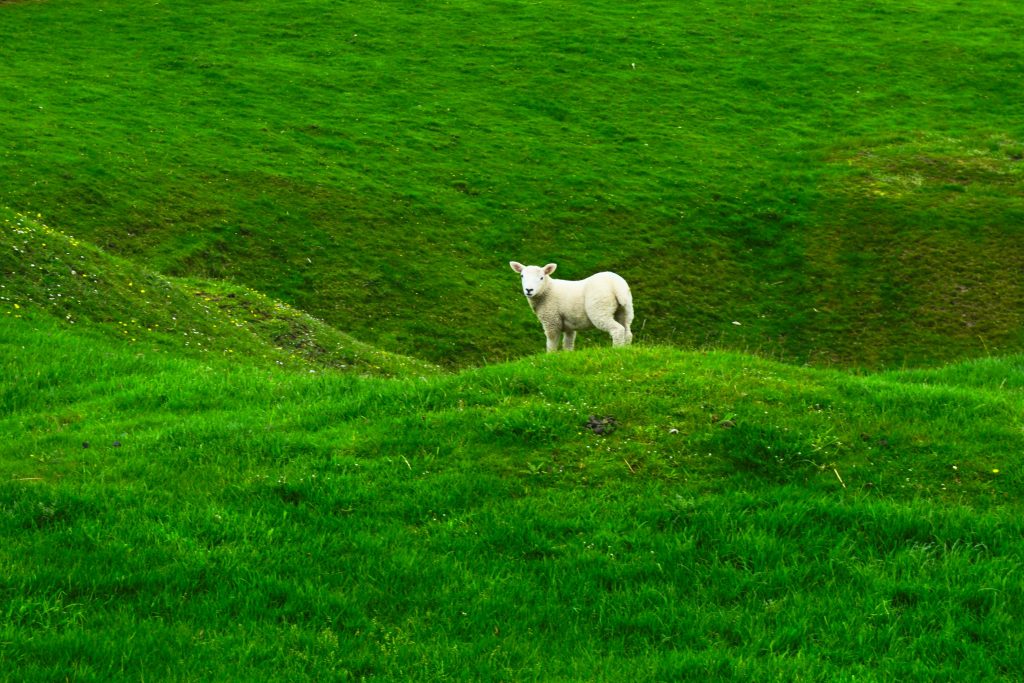
Isaiah doesn’t single anyone out; he says, “we all.” Humanity, as one flock, has wandered from its true Shepherd. It’s not that some have strayed and others haven’t; the verse tells us every heart has turned aside. Our rebellion might look different and doesn’t just describe moral wandering or rule-breaking, but it’s relational. We have drifted from Someone, not just from something.
The beauty of this passage is not in our wandering, but in what God does about it. The Lord lays our iniquity on another—the Suffering Servant, Christ. Salvation begins with God’s initiative, not ours. We did not find our way back; He came searching for us. I love this because growing up, religion was shoved down my throat, but as I study scriptures, I realized, Salvation cannot be manipulated by the preacher, it is the work of our magnificent God.
To avoid theological caricature, I would not want to go deep into Calvinism, but the doctrine of total depravity is often misunderstood; its purpose is not to crush human potential–it’s to magnify grace. It teaches that every fiber of our being is touched by sin, leaving us unable to return to God by our own strength. But in that helplessness, God’s love shines brightest.
David, after sinning with Bathsheba and murdering her husband, response is clear, “Surely, I was sinful at birth, sinful from the time my mother conceived me.” David accepts that he was sinful before his birth. As to that, he fell at God’s feet, “Cleanse me with hyssop, and I will be clean; Wash me, and I will be whiter than snow…create me a pure heart, O God, and renew a steadfast spirit within me.” In response to his sin, he does not just wallow in it; conversely, he looks to the one who can cleanse him totally. He did not seek God until God sent him a prophet to confront him; in fact, he kept concealing his sins further and further until God unveiled the truth.
The cross is proof that even when we were turned away, Christ bore the weight of our sin–That is a sacrificial agape love. When I think of the cross, I see the Shepherd who bore my wandering, and I rest in the grace that found me when I was not looking because I was ignorant of God, therefore ignorant of self.